Artificial intelligence

EU rules should leave enough room for EU tech companies to develop and use innovative AI models and systems to compete with global players. Accordingly, initiatives should be risk and problem-based, tailored to the business models and propose proportionate, workable and pragmatic solutions.

EUTA contributes to the Commission’s Quality Jobs Act consultation

Today, the European Tech Alliance (EUTA) submitted its contribution to the European Commission’s call for evidence on the Quality Jobs Act. European tech companies compete for talent in a global market. We share the Commission’s goal of quality jobs that go hand in hand with innovation and competitiveness. To get

Artificial Intelligence: Get the “high-risk AI” category right, or Europe will have to import the AI it could have built

The promise of the AI Act is to help artificial intelligence develop in Europe while ensuring a trusted and safe ecosystem. The AI Act’s risk based approach keeps that promise alive by regulating only the riskiest uses. The Commission has drafted its Guidelines on Article 6 of the AI Act, defining which AI systems count as “high-risk”. No label in the AI Act carries more weight. The moment a system earns it, the heaviest obligations follow: conformity assessments, registration, data governance obligations and reams of documentation. So the line has to sit in the right place.

Digital Omnibus: EUTA leads industry coalition urging Council to honour simplification commitments

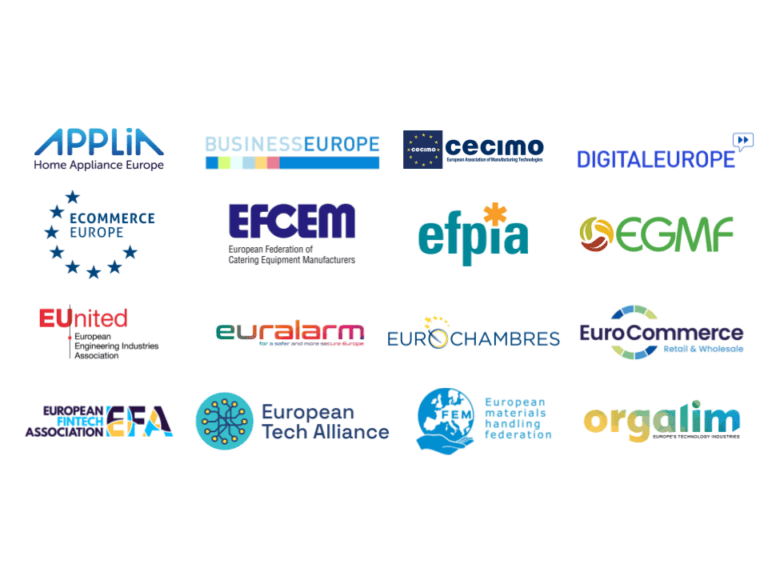
Ahead of the COREPER vote on 26 June, the European Tech Alliance (EUTA) is leading a broad coalition of 15 European tech and digital associations, representing startups, scale-ups, retailers, and the wider European digital economy across Europe and beyond.
The coalition strongly supports the proposal’s stated objective to reduce compliance burdens so that European companies can spend more time building and scaling. Getting the file right matters more than getting it done quickly.

Revising the AI Act: What Trilogue Must Get Right

Negotiations between the European Parliament, the Council and the Commission on the AI Omnibus have started. The decisions made in the coming weeks will determine whether the promise of simplification by the Commission and legislator is real, and can deliver tangible results for European innovators.
AI in the workplace: It’s time to implement, not duplicate

Artificial intelligence (AI) is transforming how we work, supporting people, creating new efficiencies, and helping companies of all sizes adapt in an increasingly competitive global economy. From optimising transport logistics to enabling smarter online shopping experiences, and supporting job-matching platforms and employee retention strategies, AI is already making a difference across Europe’s economy.

AI is no longer just a competitive advantage, it’s a necessity

The European Tech Alliance (EUTA) welcomes the European Commission’s vision to make Europe a global leader in trustworthy AI. As outlined in the AI Continent Action Plan, the EU has taken an important step forward, but ambition must now be matched with action.

AI Continent Action Plan: Turn EU’s Vision into Action

The European Tech Alliance (EUTA) supports the European Commission’s ambition to position Europe as the AI continent. The AI Continent Action Plan outlines a strong vision, but it must now move from theory to practice: providing European tech companies with a clear, predictable, and risk-based framework.

Ensuring Europe’s Competitiveness in AI: Key Principles and Actions for the GPAI Code of Practice

As Europe shapes the future of artificial intelligence (AI) through the AI Act and the General Purpose AI (GPAI) Code of Practice, it faces a critical challenge: how to foster innovation while ensuring responsible AI governance.
The latest EUTA paper, Ensuring Europe’s Competitiveness: Key Principles and Actions for the GPAI Code of Practice, sets out the essential steps to ensure European companies can compete effectively on the global AI stage.